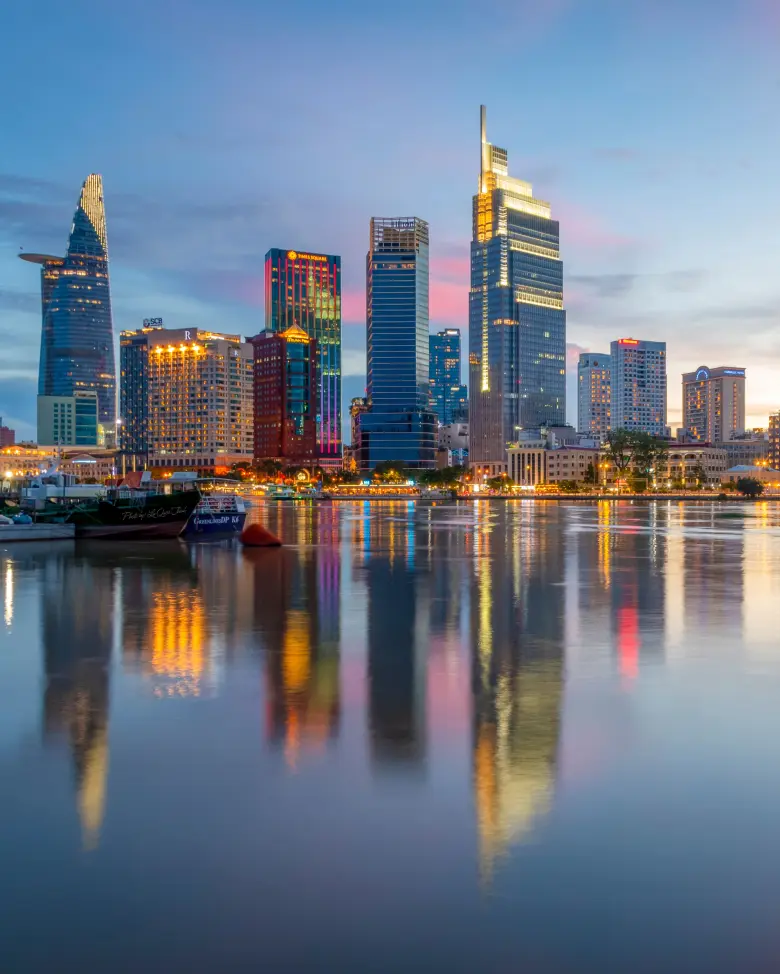
Ho Chi Minh — South Vietnam

South Vietnam

Ho Chi Minh

Feel the energy of Ho Chi Minh City, Vietnam’s largest city, where street food, rooftop bars, historic landmarks, local markets, and modern life all mix together.

Written by Denis

At a glance

Ho Chi Minh essentials

South VietnamRegion
24Places
8FAQs

Best for

Foodies, street food enthusiasts, history and culture seekers

Highlights

War Remnants Museum & Reunification Palace, rooftop bars with skyline views

Local tip

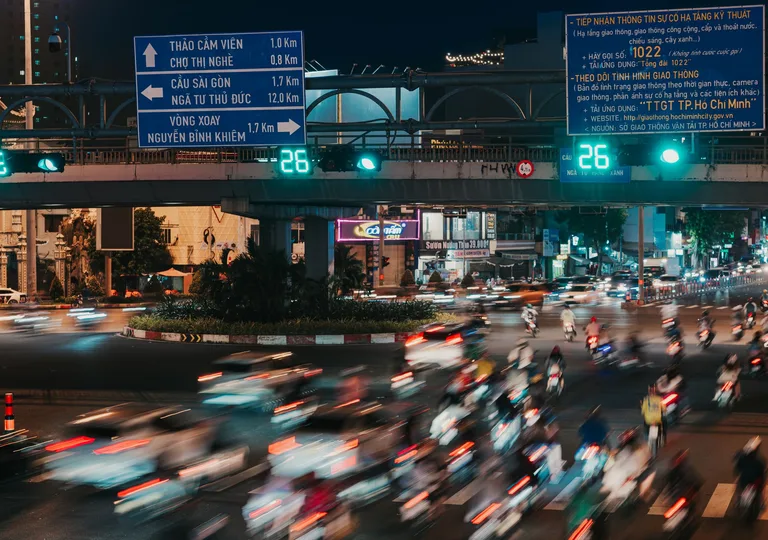
Avoid peak hours (7–9 AM and 5–7 PM) when traveling by taxi.

City guide

About Ho Chi Minh

Ho Chi Minh City, once called Saigon, is Vietnam’s biggest city and its main economic hub. The city grew as Vietnam expanded southward. On July 2, 1976, it was officially named "Thành phố Hồ Chí Minh" to honor Ho Chi Minh.

The city is in southern Vietnam. It has a tropical climate. Instead of four seasons, there is a dry season from December to April and a rainy season from May to November. The average temperature is 27°C, so it stays hot most of the year.

Ho Chi Minh City leads Vietnam's economy. Services, finance, trade, tourism, construction, industry, and high technology are all well developed here. The city ranks first in the country for GRDP and budget revenue.

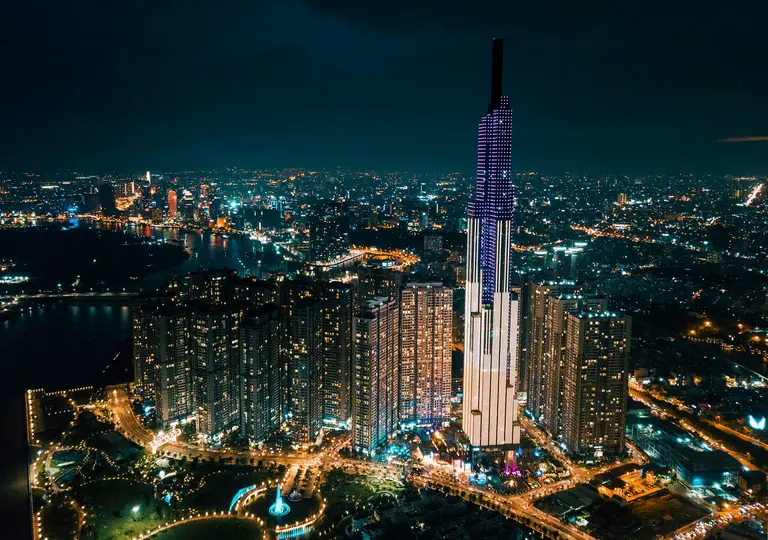
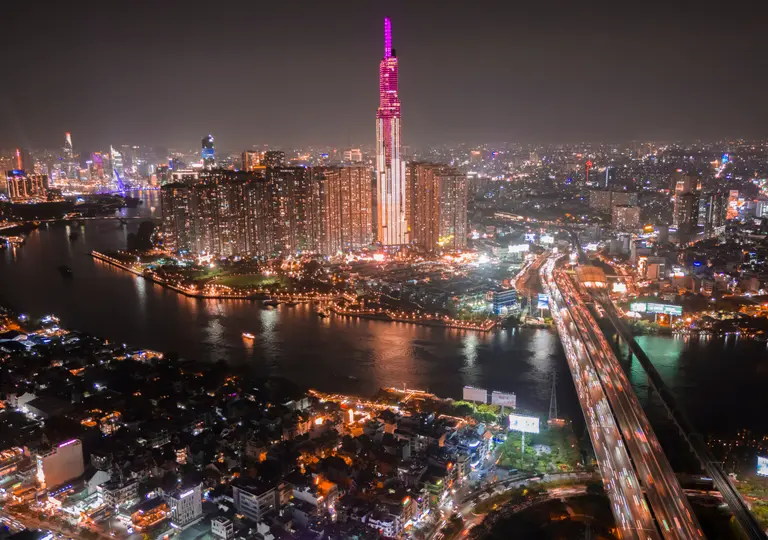
The city's culture is diverse, blending Vietnamese, Chinese, Khmer, and Western traditions. This mix shows up in its architecture, neighborhoods like Chợ Lớn, food, religious sites, and city life. Tourism is also important, with attractions like the Independence Palace, Notre-Dame Cathedral, Bến Thành Market, Landmark 81, museums, and historic buildings.

Ho Chi Minh City, formerly Saigon, is Vietnam's main metropolis. It is a fast-growing center for the country's economy, culture, education, and tourism.
Planning a coastal escape? Use our route guide to travel from Ho Chi Minh City to Mui Ne and compare buses, trains, and private transfers.

Top Places to Visit

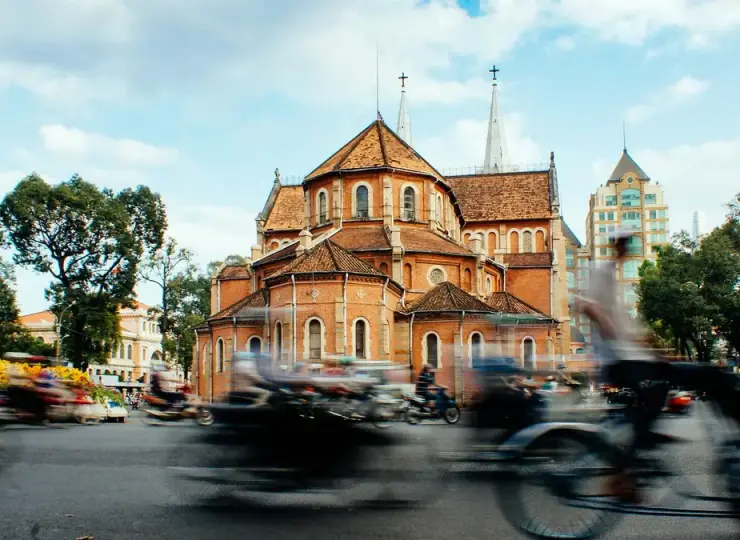
Traffic passing Notre-Dame Cathedral Basilica of Saigon in Ho Chi Minh City

Notre-Dame Cathedral Basilica of Saigon

One of the most recognizable Catholic and architectural symbols of Ho Chi Minh City. Built during the French colonial period, the cathedral reflects the religious, cultural, and architectural heritage of old Saigon.

Visit note

Exterior onlyInterior closedScaffolding visible

01 Công trường Công xã Paris, Quận 1, Hồ Chí Minh, Việt Nam
Map
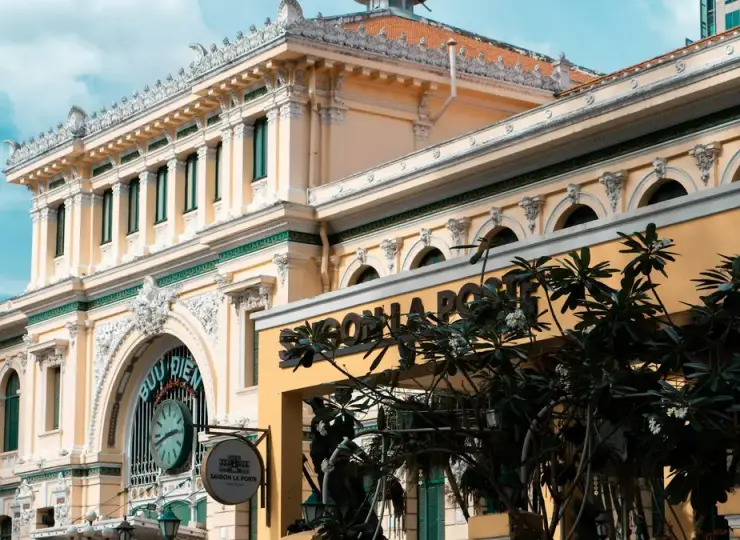
Exterior of Saigon Central Post Office behind a fence in Ho Chi Minh City

Saigon Central Post Office

It is one of the most iconic colonial landmarks in Ho Chi Minh City. Located near Notre-Dame Cathedral Basilica of Saigon, this historic building reflects Saigon’s early modernization through postal services, telegraphy, and telephone communication.

02 Công trường Công xã Paris, Bến Nghé, Quận 1, Hồ Chí Minh, Việt Nam
Map
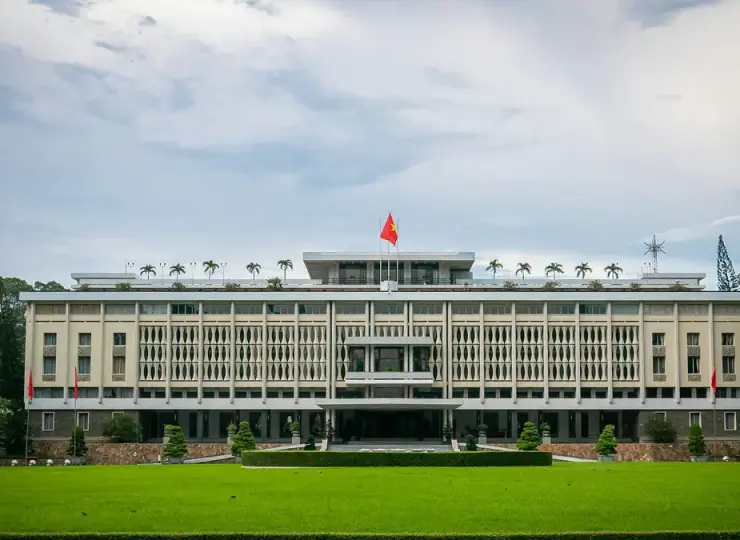
White Independence Palace building with a flag on top in Ho Chi Minh City

Independence Palace

Once the residence and workplace of the President of South Vietnam, the palace is closely associated with the end of the Vietnam War and the country’s reunification. Today, it serves as a museum and historical site where visitors can explore Vietnam’s political history, architecture, and wartime legacy.

135 Nam Kỳ Khởi Nghĩa, Bến Thành, Hồ Chí Minh, Việt Nam
Map
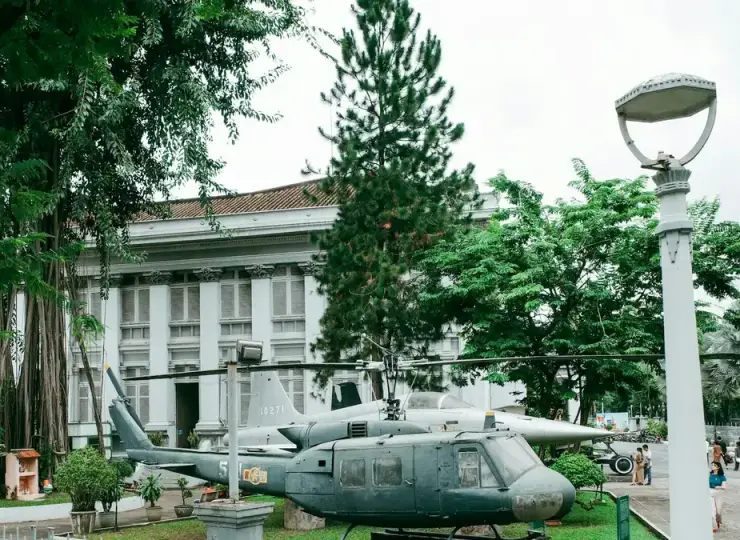
Military helicopter displayed outside the War Remnants Museum in Ho Chi Minh City

War Remnants Museum

One of the most visited museums in Ho Chi Minh City and an important place for understanding Vietnam’s modern history. Its exhibitions focus on the human consequences of war, including photographs, documents, military equipment, and stories of suffering and resilience.

28 Võ Văn Tần, Phường Xuân Hòa, Thành phố Hồ Chí Minh, Việt Nam
Map
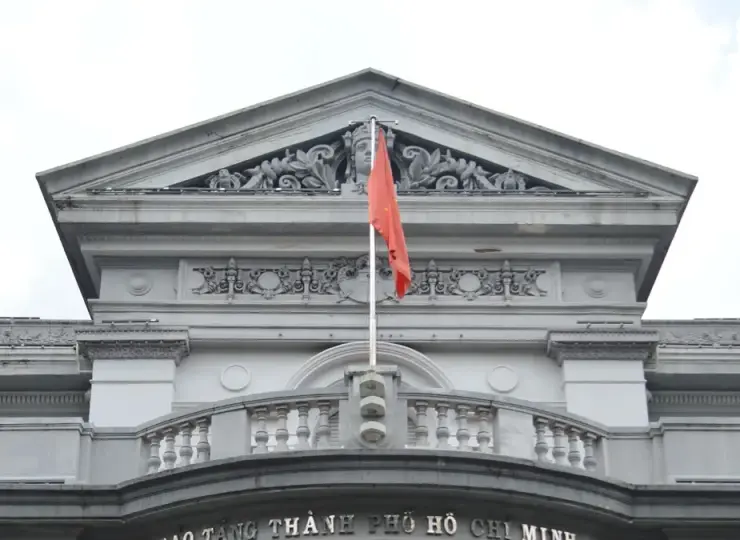
Colonial architecture of the Museum of Ho Chi Minh City

Museum of Ho Chi Minh City

A valuable place to understand the history of Saigon and modern-day Ho Chi Minh City. Housed in a beautiful French colonial building, the museum presents the city’s development through culture, trade, politics, and everyday life.

65 Lý Tự Trọng, Sài Gòn, Hồ Chí Minh, Việt Nam
Map
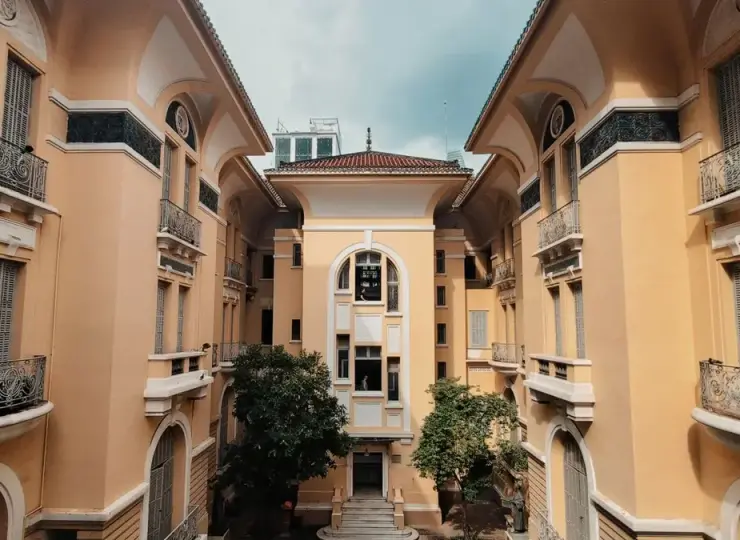
Yellow colonial architecture at the Ho Chi Minh City Fine Arts Museum

Fine Arts Museum

A destination for exploring the artistic and cultural history of Saigon. Located in a former mansion of a wealthy Saigon family, the museum combines colonial architecture with collections of Vietnamese paintings, sculptures, ceramics, and traditional art.

97 Phó Đức Chính, Bến Thành, Hồ Chí Minh, Việt Nam
Map
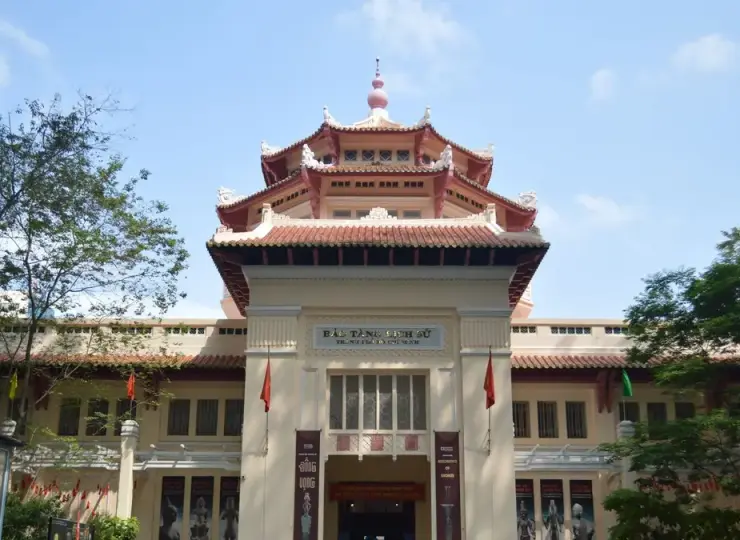
Vietnam History Museum building framed by trees in Ho Chi Minh City

Vietnam History Museum

One of the key places to learn about Vietnam's ancient and cultural history, especially in the southern region. The museum presents archaeology, ethnography, art, religious objects, and cultural connections between Vietnam and other Asian countries.

2 Nguyễn Bỉnh Khiêm, Sài Gòn, Hồ Chí Minh, Việt Nam
Map
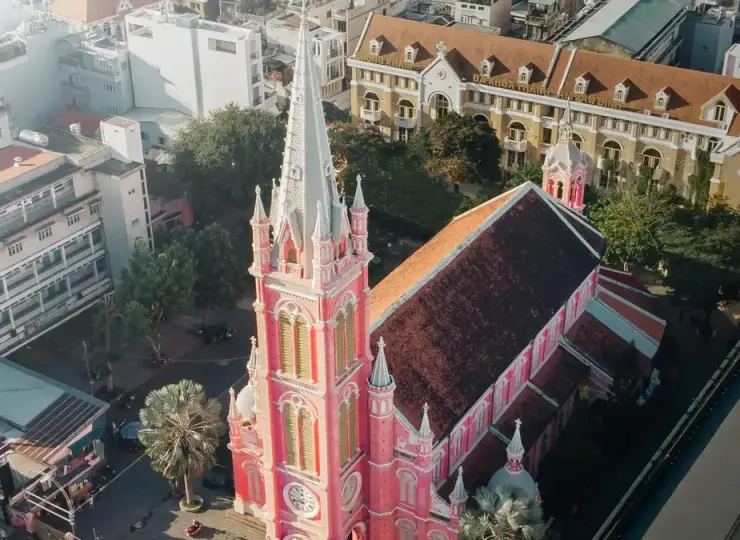
Aerial view of the pink Tan Dinh Church in Ho Chi Minh City

Tan Dinh Church

Also known as the Pink Church, it is one of the most recognizable Catholic and architectural landmarks in Ho Chi Minh City. Built in the French colonial period, it combines Romanesque, Gothic, and Renaissance elements with a striking pink facade.

289 Hai Bà Trưng, Xuân Hòa, Hồ Chí Minh, Việt Nam
Map
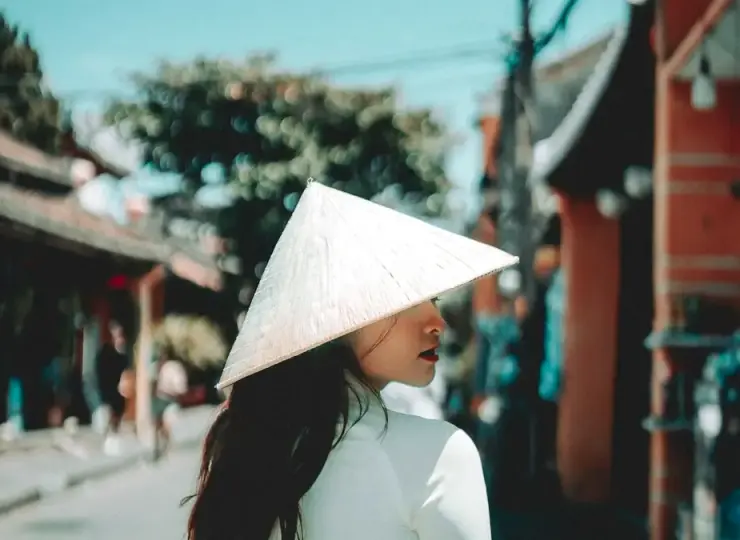
Woman wearing a white nón lá walking along a street in Vietnam

Museum of South Vietnamese Women

Dedicated to the history, culture, and role of women in southern Vietnam. Its exhibitions highlight women’s contributions to family life, traditional culture, politics, the revolutionary movement, and national history.

202 Võ Thị Sáu, Xuân Hòa, Hồ Chí Minh, Việt Nam
Map
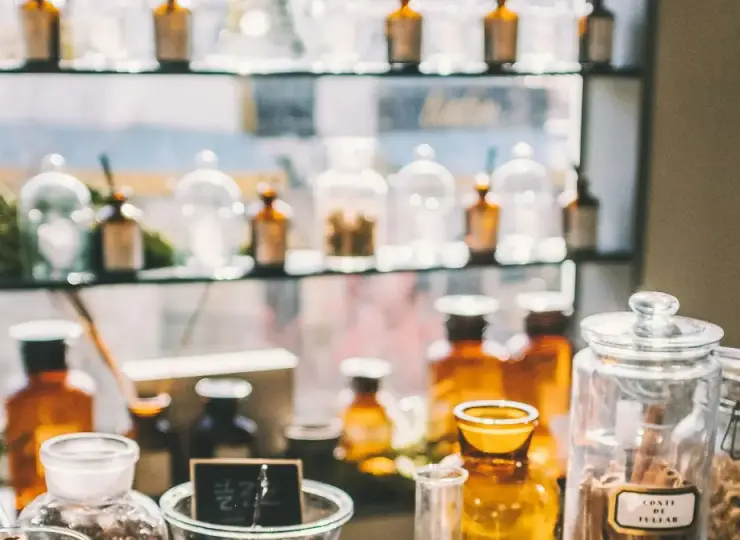
Glass jars and herbal medicine bottles in a traditional medicine display

Traditional Medicine Museum

It introduces the history of Vietnamese traditional medicine through herbal remedies, old medical tools, pharmacy cabinets, books, and beautifully designed interiors. The museum offers visitors a different view of Vietnam through healing traditions, medicinal knowledge, and everyday practices of health and care.

41 Hoàng Dư Khương, Hòa Hưng, Hồ Chí Minh, Việt Nam
Map

Places to Relax and Have Fun

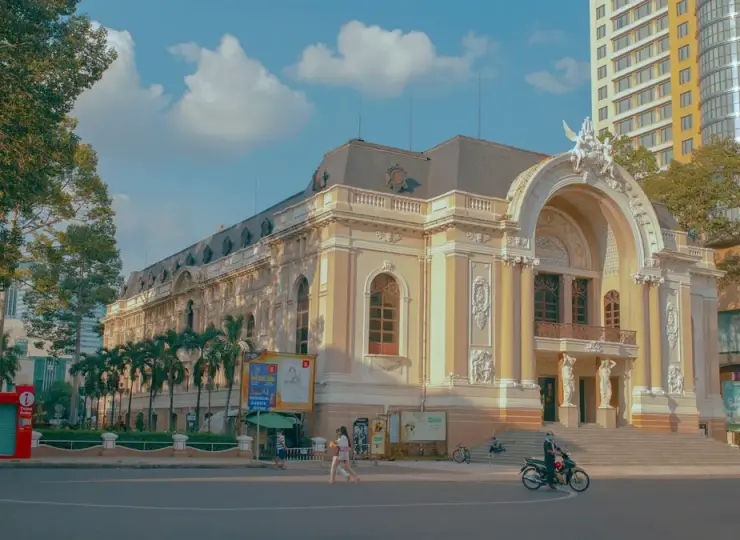
Black car parked near the white Saigon Opera House building in Ho Chi Minh City

Saigon Opera House

Also known as the Ho Chi Minh City Municipal Theatre, it is one of the most elegant French colonial landmarks in central Saigon. Located on Lam Son Square near Dong Khoi Street, the opera house is a major venue for concerts, theatre performances, cultural shows, and special events.

07 Công trường Lam Sơn, Sài Gòn, Hồ Chí Minh, Việt Nam
Map
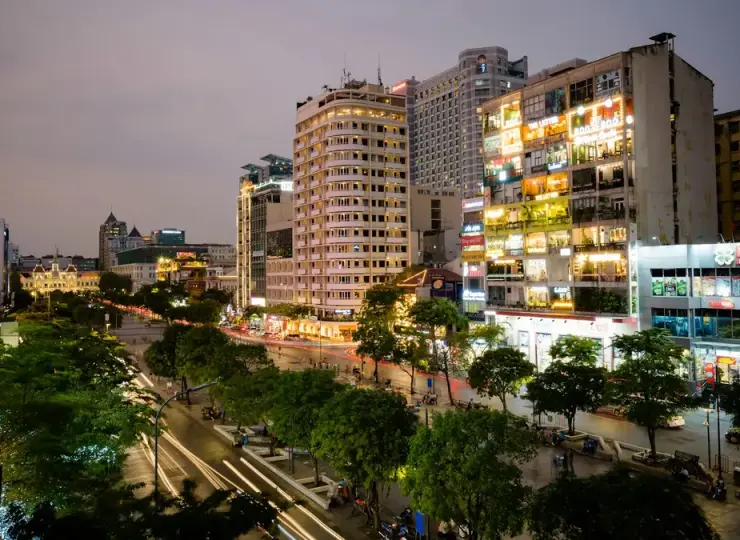
Night view over Nguyen Hue Walking Street with lit high-rise buildings in Ho Chi Minh City

Nguyen Hue Walking Street

The most popular public space in Ho Chi Minh City and a lively symbol of modern Saigon. Stretching from the Saigon River to the Ho Chi Minh City People’s Committee Building, this wide pedestrian boulevard is surrounded by cafes, restaurants, hotels, shops, and famous city landmarks.

4 Bùng binh Cây Liễu, Sài Gòn, Hồ Chí Minh, Việt Nam
Map
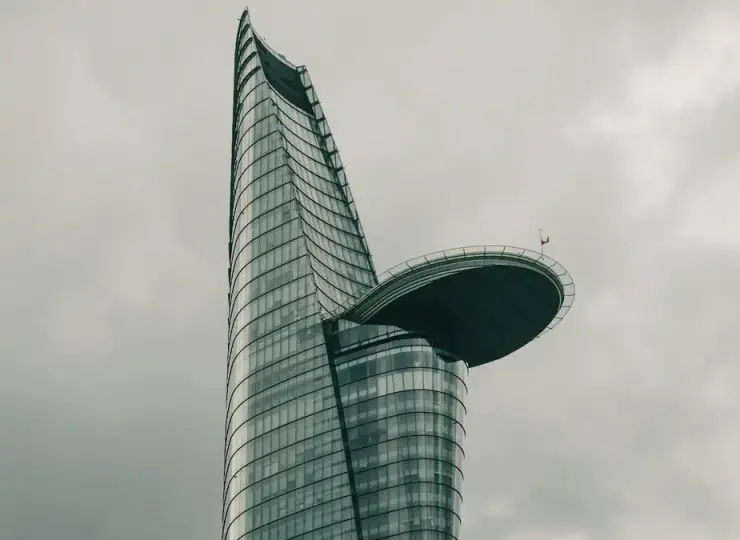
Bitexco Financial Tower rising above modern buildings in Ho Chi Minh City

Bitexco Financial Tower

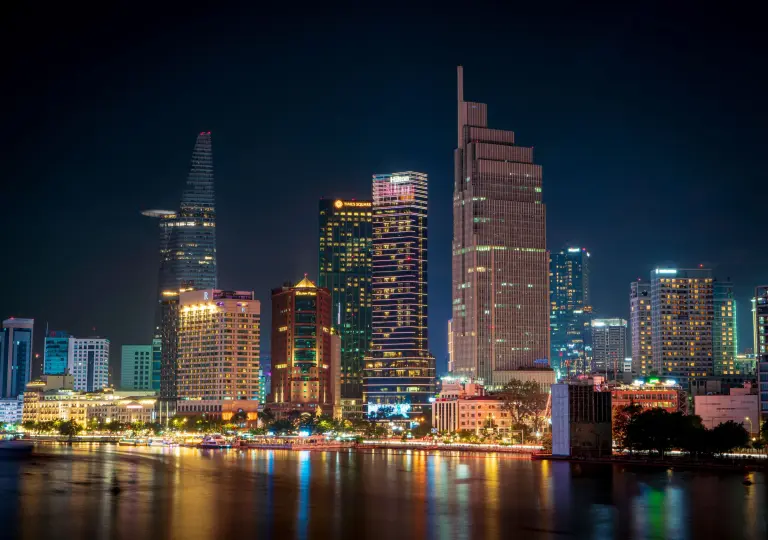
The most recognizable skyscraper in Ho Chi Minh City and a symbol of modern Saigon. Inspired by the shape of a lotus bud, the tower stands out in the city skyline with its unique design and central location, offering panoramic views of Ho Chi Minh City.

2 Đ. Hải Triều, Sài Gòn, Hồ Chí Minh, Việt Nam
Map
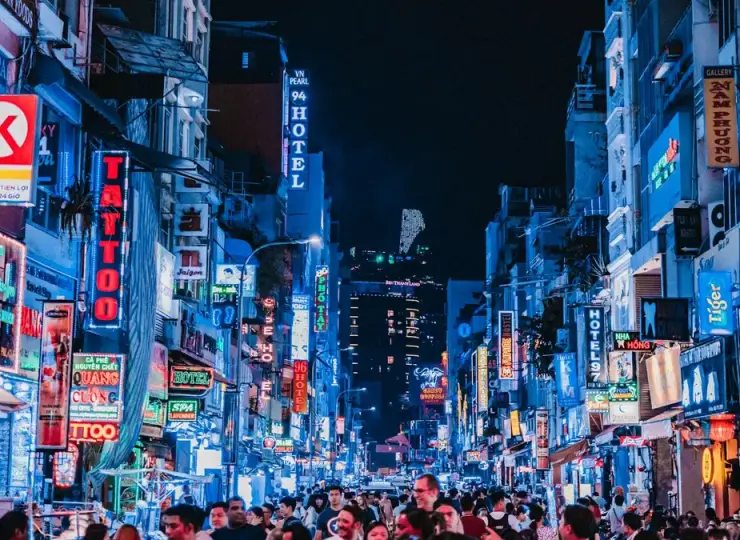
Crowds and neon signs on Bui Vien Walking Street at night in Ho Chi Minh City

Bui Vien Walking Street

The most famous nightlife street in Ho Chi Minh City and the heart of Saigon’s backpacker area. Located near Pham Ngu Lao and De Tham streets, Bui Vien is known for its bars, street food, music, budget hotels, and energetic evening atmosphere.

Bùi Viện Phạm Ngũ Lão, phường, Bến Thành, Hồ Chí Minh, Việt Nam
Map
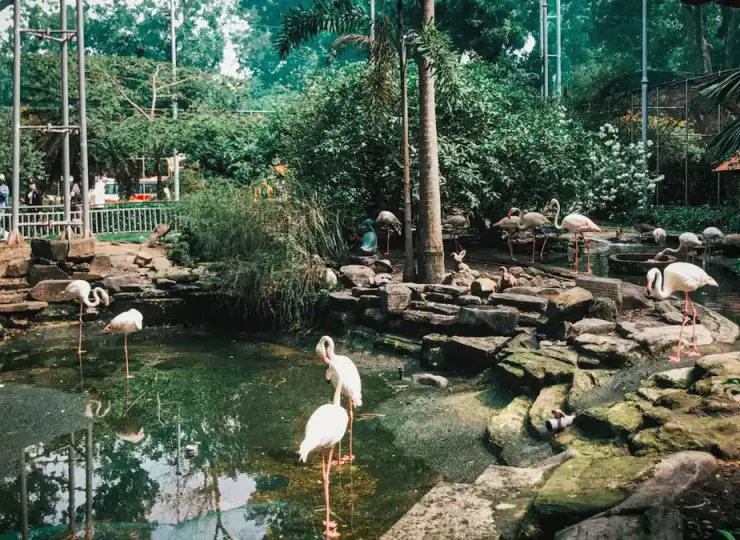
Flamingos standing in a pond at Saigon Zoo and Botanical Garden

Saigon Zoo and Botanical Garden

One of the oldest attractions in Ho Chi Minh City and one of the longest-running zoos in the world. Located near the city center, it combines a zoo, a botanical garden, a green park, and a family-friendly recreation area.

2 Nguyễn Bỉnh Khiêm, Sài Gòn, Hồ Chí Minh, Việt Nam
Map
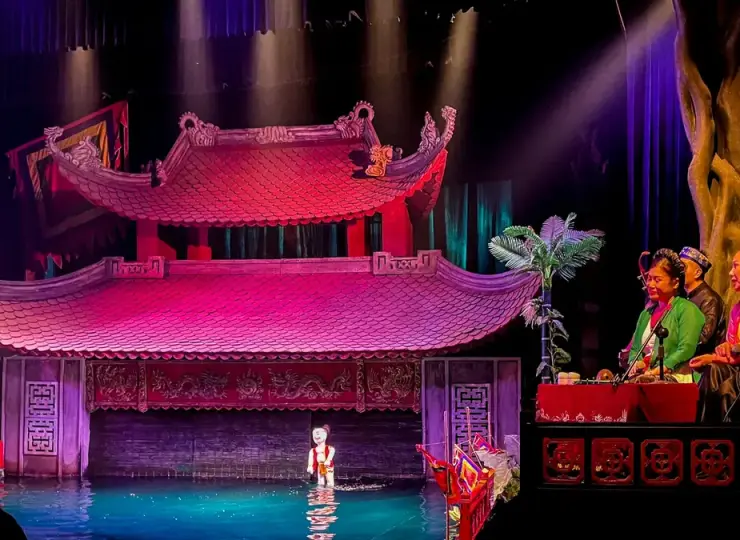
Traditional water puppet show on a colorful stage in Vietnam

The Golden Dragon Water Puppet Theater

The best place in Ho Chi Minh City to experience traditional Vietnamese water puppetry. Located near the city center, the theater presents colorful performances with wooden puppets, water effects, live music, folk stories, dragons, farmers, and scenes from Vietnamese village life.

55B Nguyễn Thị Minh Khai, Bến Thành, Hồ Chí Minh, Việt Nam
Map

Holy and Spiritual Places

Woman taking a photo inside Thien Hau Pagoda in Ho Chi Minh City

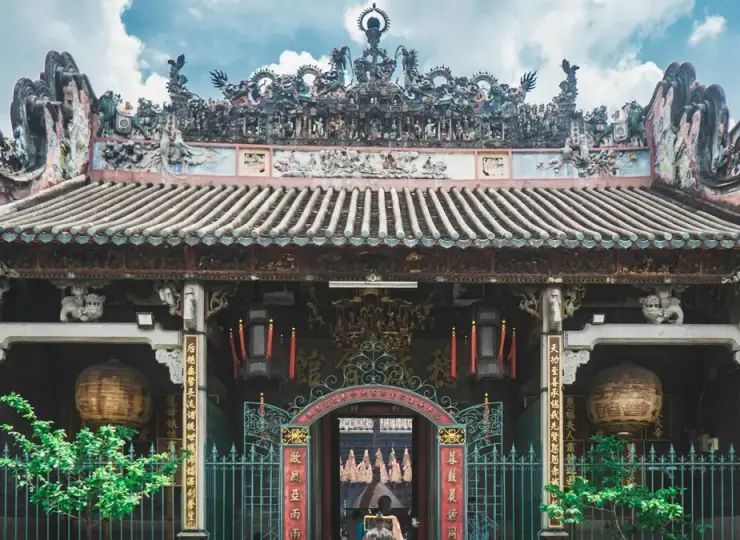
Thien Hau Pagoda

Also known as Tue Thanh Assembly Hall or Chua Ba Thien Hau, it is one of the most important Chinese temples in Ho Chi Minh City. Located in the historic Cho Lon area, the temple is dedicated to Thien Hau, the sea goddess worshipped by many Chinese communities.

710 Nguyễn Trãi, Chợ Lớn, Hồ Chí Minh, Việt Nam
Map
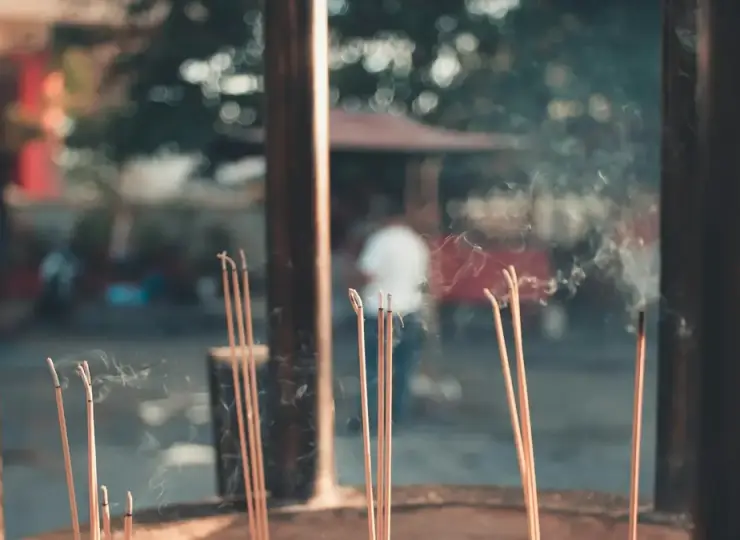
Incense sticks burning at Emperor Jade Pagoda in Ho Chi Minh City

Emperor Jade Pagoda

Also known as Phuoc Hai Tu, it is one of the most atmospheric temples in Ho Chi Minh City. Built in the early 20th century, the pagoda combines Chinese temple architecture, Buddhist worship, Taoist deities, wooden statues, colorful ceramic details, and a deeply spiritual interior.

73 Mai Thị Lựu, Tân Định, Hồ Chí Minh, Việt Nam
Map
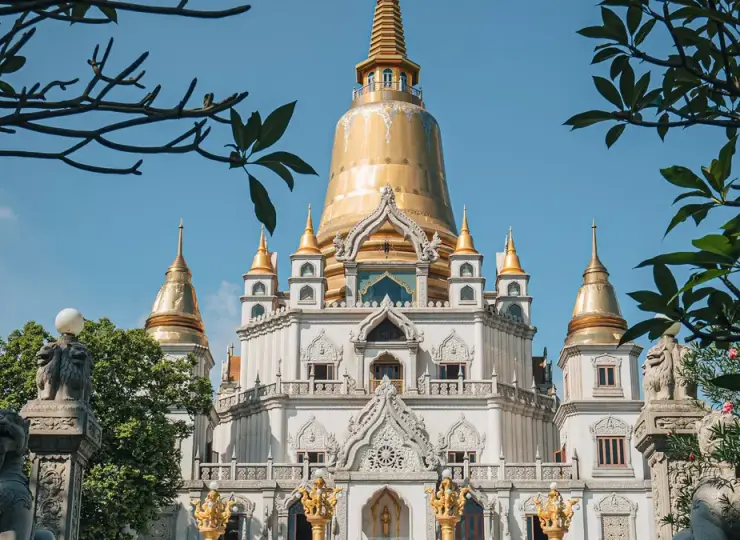
Buu Long Pagoda framed by tree branches in Ho Chi Minh City

Buu Long Pagoda

One of the most beautiful Buddhist temples in Ho Chi Minh City and a peaceful escape from the busy city center. Located on a hill near the Dong Nai River, the pagoda is known for its impressive Gotama Cetiya stupa, golden details, and architecture inspired by Thai, Indian, and Vietnamese Buddhist traditions.

81 Nguyễn Xiển, Long Bình, Hồ Chí Minh 71300, Việt Nam
Map
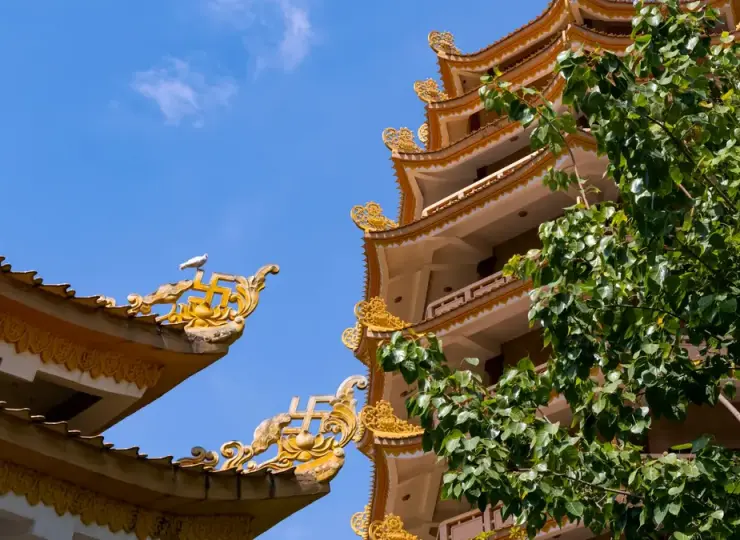
Traditional temple roofs of Vinh Nghiem Pagoda against a blue sky in Ho Chi Minh City

Vinh Nghiem Pagoda

One of the most important Buddhist temples in Ho Chi Minh City. Built in the 20th century, it was inspired by a historic northern Vietnamese pagoda of the same name and combines traditional Vietnamese Buddhist architecture with modern construction techniques.

339 Nam Kỳ Khởi Nghĩa, Xuân Hòa, Hồ Chí Minh, Việt Nam
Map
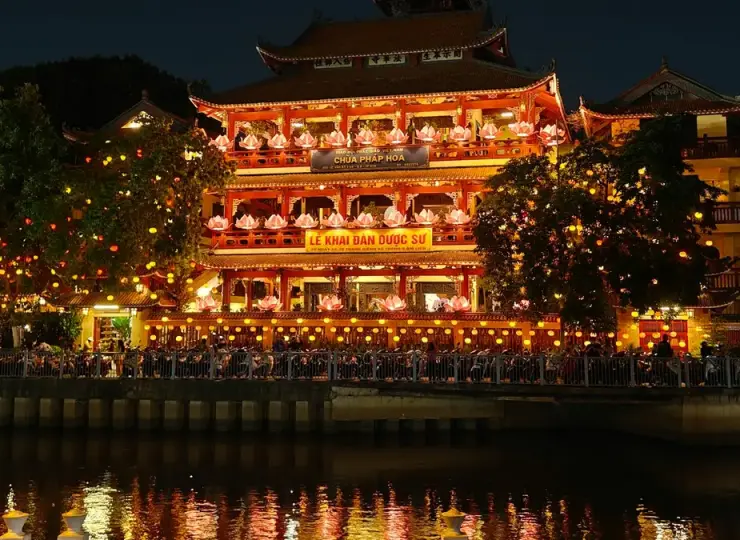
A building lit up at night with lights reflecting in the water

Phap Hoa Pagoda

A peaceful Buddhist temple located near the Nhieu Loc Canal in Ho Chi Minh City. Founded in the early 20th century, the pagoda is known for its traditional Vietnamese architecture, calm atmosphere, colorful lanterns, and riverside setting.

870 Trường Sa, Nhiêu Lộc, Hồ Chí Minh, Việt Nam
Map
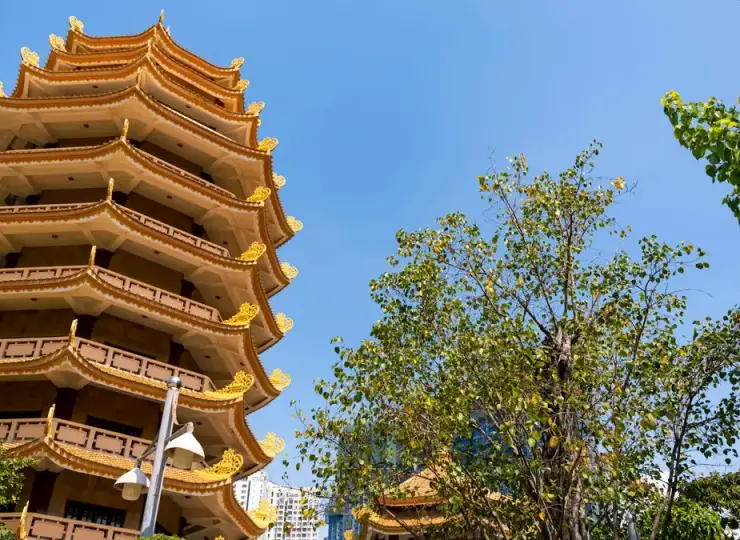
Tall ornate pagoda at the Vietnamese National Buddhist Temple against a blue sky in Ho Chi Minh City

Vietnamese National Buddhist Temple

The most significant Buddhist landmark in Ho Chi Minh City. Located on 3 Thang 2 Street, the pagoda has a strong connection with the history of Buddhism in southern Vietnam and today serves as an important center of the Vietnam Buddhist Sangha in the city.

244 3 Tháng 2, Hòa Hưng, Hồ Chí Minh, Việt Nam
Map
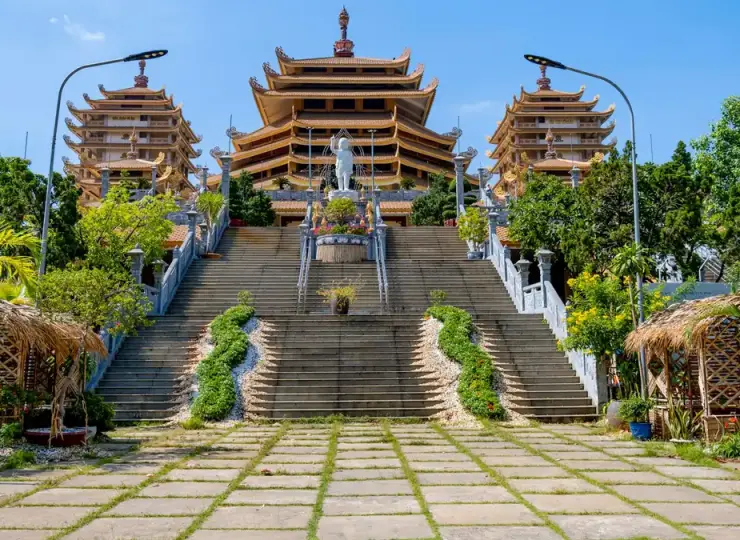
Minh Dang Quang Buddhist Temple with ornate tiered roofs and stairs in Ho Chi Minh City

Minh Dang Quang Buddhist Temple

Also known as Phap Vien Minh Dang Quang, it is one of the largest and most impressive Buddhist complexes in Ho Chi Minh City. Located in the eastern part of the city, the temple offers a peaceful contrast to the surrounding modern urban landscape.

505 Võ Nguyên Giáp, Bình Trưng, Hồ Chí Minh, Việt Nam
Map
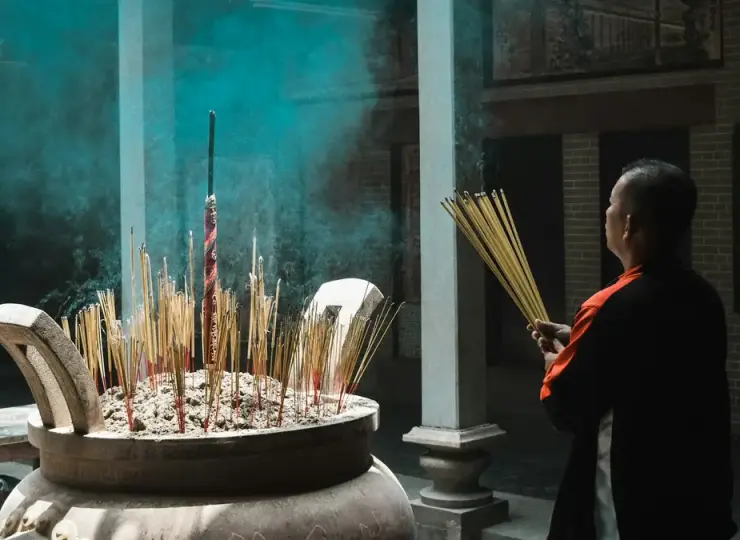
Man holding incense sticks inside a temple in Ho Chi Minh City

Van Phat Pagoda

Also known as the Temple of Ten Thousand Buddhas, it is a unique Buddhist temple hidden in the lively Chinatown area of Ho Chi Minh City. Located in District 5, the pagoda is famous for its thousands of Buddha statues, richly decorated halls, Chinese-style details, and compact multi-storey layout.

66/14 Đ. Nghĩa Thục, An Đông, Hồ Chí Minh, Việt Nam
Map

FAQ

Questions Before You Go

Quick answers for planning your first visit to Ho Chi Minh, from timing and safety to transport, shopping, and where to stay.

How many days do you need to get to know Ho Chi Minh City?

For a first visit, 2–3 days are usually enough to explore central Saigon, see the main attractions, visit local markets, and take a day trip outside the city.

When is the best time to visit Ho Chi Minh City?

The best time to visit is during the dry season, from December to April. During these months, there is less rain, the weather is more stable, and walking around District 1 and other tourist areas is more comfortable.

Is Ho Chi Minh City safe for tourists?

Ho Chi Minh City is safe for tourists, but in crowded places, markets, and busy tourist streets, you should keep an eye on your phone, bag, and wallet.

Where to go in Ho Chi Minh City in the evening?

For nightlife, Bui Vien Street is a good choice, with bars, music, and a lively atmosphere. For a more relaxed evening walk, Nguyen Hue Walking Street in central Saigon is a comfortable option.

Where to go from Ho Chi Minh City for one day?

Popular options for a one-day trip from Ho Chi Minh City are the Cu Chi Tunnels and Can Gio. The tunnels are more about Vietnam’s history, while Can Gio is more about nature, mangrove forests, and relaxing by the water.

Where to go shopping and try local food in Ho Chi Minh City?

For shopping, souvenirs, and local food, Ben Thanh Market, Binh Tay Market, and An Dong Market are good choices. You can find clothes, spices, gifts, Vietnamese dishes, and street food there.

Where is the best area to stay in Ho Chi Minh City for tourists?

For a first trip, it is most convenient to stay in District 1. Good areas for tourists are near Nguyen Hue, Dong Khoi, or Bui Vien streets, where you can find cozy cafés, hotels, and attractions.

What is the most comfortable way to get around Ho Chi Minh City?

For tourists, the easiest way to get around is by using taxi and motorbike taxi apps, especially for trips between different districts.

Plan Your Journey

Use these practical guides to plan your route, compare transport options, and prepare for your trip.