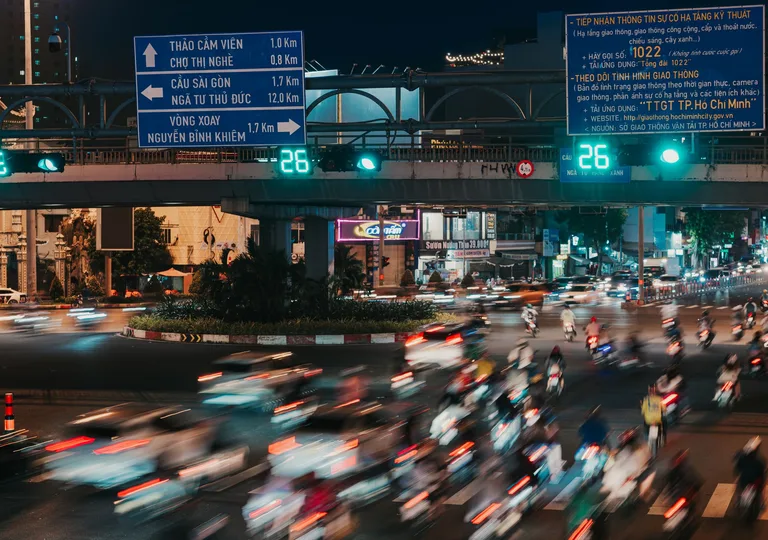
The best thing I ate last month cost 45,000 ₫ and I ate it on a plastic stool with my knees somewhere up around my chin.
I'm not saying that to be romantic about it. It's the actual shape of eating in this city, and it's the thing that catches visitors out. Ho Chi Minh City's food mostly doesn't live in restaurants. It lives in single-dish shops that open at six in the morning, sell one thing extremely well, and are shuttered by ten. Ask a local for a restaurant recommendation and you'll often get a blank look. Ask where to eat com tam and you'll get an address, a cross street, and a warning about which hours are pointless.
So after three years here I've stopped asking people where to eat and started asking what they want to eat, because in this city those are two different questions. This guide is built the same way: dish first, then the district where that dish is worth the trip.
For the wider picture of neighborhoods, attractions and practical basics, start with my Ho Chi Minh City travel guide.
Why This Guide Names Streets and Not Restaurants
One honest warning before the districts.
I've deliberately not given you a list of twelve restaurant names with opening hours. Street kitchens here close, move two doors down, hand over to a cousin, or stop making the good version when the grandmother retires. A list like that is out of date within a year, and there is nothing worse than crossing a city in 34-degree heat to find a roller shutter.
Streets outlast shops. Vinh Khanh has been the snail street for decades and will still be the snail street when whichever stall you liked has gone. So this guide points you at areas and dishes, and leaves the last hundred meters to you. When you get there, use the rule every local uses: eat where the crowd is, especially if the crowd is Vietnamese and eating at a normal Vietnamese hour.
Where to Eat in Ho Chi Minh City: Quick Comparison
| District | What it's good for | Go for | Best time |
|---|---|---|---|
| District 1 | Convenience and sit-down restaurants | Banh mi, com tam, Japanese, air conditioning | Any time |
| District 3 | Everyday Saigon eating near the center | Banh xeo, bun thit nuong, coffee, che | Breakfast and late afternoon |
| District 4 | Street food and seafood | Oc (snails), grilled seafood, beer | After 6pm |
| Cho Lon (5 and 6) | Chinese-Vietnamese cooking | Hu tieu, com ga, dim sum, herbal soups | Morning |
| District 10 | Night street food | Ho Thi Ky alley, Cambodian-Vietnamese dishes | After dark |
| Binh Thanh and Phu Nhuan | Neighborhood food, no tourists | Bun bo Hue, banh canh cua, market stalls | Early morning |
| Thao Dien | International food and brunch | Everything except Vietnamese | Weekend mornings |
If you only have two or three days and you're based centrally, the useful version of this table is short: eat breakfast where you're staying, cross into District 4 one evening, and give one morning to Cho Lon. That covers the range without turning your trip into a food tour.
District 1: Convenient, and Priced Accordingly

You'll almost certainly be staying here or near here, so let's be fair to it. District 1 has genuinely good food. It also has the highest concentration of places that exist because tourists walk past them, and telling the two apart takes about a day.
The rough rule I use: the closer you get to Nguyen Hue and Dong Khoi, the more of the bill is rent. Walk five minutes west or south of the pedestrian street and prices drop by a third for the same dish.
What's worth eating here:
- Banh mi from a cart, not a cafe. A cart charges 25,000 to 40,000 ₫ and toasts the bread in front of you.
- Com tam, broken-rice plates with grilled pork. This is Saigon's own dish and District 1 does it perfectly well.
- The Japanese quarter around Le Thanh Ton and Thai Van Lung. Dozens of small izakayas and ramen counters in a few blocks, run for Japanese residents rather than for visitors. It's not Vietnamese food, but it's some of the best value eating in the district.
- The streets around Ben Thanh Market after dark. Phan Boi Chau and the surrounding blocks fill with tables in the evening. It's touristy and you'll be handed a laminated menu, but the grilled seafood is decent and the atmosphere is the point.
What I'd skip: anything with photographs of the food on a board outside, and any "authentic Vietnamese restaurant" whose staff calls to you from the pavement. If you want a sit-down Vietnamese meal with air conditioning and a wine list, that exists here and it's fine — just know you're paying four to six times the street price for it.
If you're still choosing a base, my guide to where to stay in Ho Chi Minh City goes through the districts from a different angle, and food is one of the better reasons to pick District 3 or District 4 over the middle of District 1.
District 3: Where I Actually Eat

District 3 starts about a ten-minute walk from the cathedral and immediately stops performing. Same food, ordinary prices, people going about their day.
This is where I send friends who have one week and want to feel like they ate properly. The streets around Vo Van Tan, Ban Co Market and Nguyen Thuong Hien are dense with small shops doing one dish each. Nguyen Thuong Hien in particular is known for che, the sweet dessert soups served over crushed ice, and a row of stalls that get going in the late afternoon.
Go for banh xeo, the big turmeric-yellow crepe you tear up and wrap in herbs and lettuce. Go for bun thit nuong, cold noodles with grilled pork and fish sauce, which is the best hot-weather lunch in the city. Go for coffee: District 3 is thick with small cafes, and the traditional ones serve ca phe sua da for 15,000 to 25,000 ₫ against 45,000 to 60,000 ₫ at the chains.
The trade-off is that you'll use Grab more, because District 3 spreads out and the good places aren't clustered. Budget around 56,000 ₫ for a car back into the center — my guide to getting around Ho Chi Minh City has the rest of the numbers.
District 4: Snails, Seafood and the Best Value in the City

District 4 is a small wedge of land across the canal from District 1, close enough that the bridges are the only obstacle, and for years it had a reputation it has long since outgrown. Now it's mostly known for one thing: eating outdoors in the evening.
Vinh Khanh Street is the reason to come. It's the city's oc street — oc meaning snails, but in practice covering clams, scallops, mussels, razor clams, prawns and whatever else came in that day, grilled over charcoal with garlic butter, chili salt, tamarind or peanuts. Tables spill across the pavement, the beer is cold and cheap, and a group of four can eat properly for what one main course costs on Dong Khoi.
How it works: you order by the plate; each plate is one shellfish cooked one way, and you keep ordering until you're done. Two to four plates per person is normal. Prices are usually on the menu — check them, because a few items are sold by weight, at market rate.
Go after six. Before that it's a quiet residential street and you'll wonder what the fuss was about. It's a ten-minute drive from District 1 outside rush hour, and the bridges back get slow in the evening, which is worth knowing before you look at the Grab estimate and assume something's wrong.
Cho Lon: The Morning District

Cho Lon spreads across Districts 5 and 6 and is the largest Chinatown in Vietnam, settled by Chinese merchants long before Saigon absorbed it. The food is a genuinely different tradition, and it's the strongest argument in this guide for getting in a car and going somewhere.
Eat here in the morning. Most of what's good is breakfast food, and by two in the afternoon the good places have sold out and closed.
What to look for:
- Hu tieu, the southern noodle soup that people who've only read about pho don't know to order. Clear pork broth, thin chewy noodles, and usually served dry with the broth on the side if you ask for hu tieu kho. This is Saigon's real breakfast far more than pho is.
- Com ga, Hainanese-style poached chicken rice, which Cho Lon does better than anywhere else in the city.
- Dim sum in the mornings, sold from steamer carts in old dining halls.
- Herbal soups and Chinese-style desserts around the market streets, which are an acquired taste and worth acquiring.
Binh Tay Market sits at the heart of it. Unlike Ben Thanh it's still a working wholesale market, so the food stalls around and inside it are feeding traders, not visitors. Go early, and treat the market as the place you eat rather than the place you shop.
District 10: Ho Thi Ky After Dark

Behind the wholesale flower market in District 10 there's a narrow lane that turns into one of the busiest street-food alleys in the city every night. It's known simply as Ho Thi Ky, and a lot of it is Cambodian-Vietnamese — the community here came from Cambodia decades ago and the food came with them.
You'll find num banh chok, grilled skewers, banh trang nuong, fermented fish dishes, tropical fruit you won't recognize, and a great deal of noise. It gets uncomfortably crowded on Friday and Saturday nights, so a weekday is better. Come hungry, walk the whole lane before ordering anything, and expect to eat standing up.
This one is genuinely a local night out rather than a sight, which is exactly why I'd put it above a second evening on Bui Vien. If you want the drinking version of the evening instead, that's covered in my guide to Ho Chi Minh City nightlife.
Binh Thanh and Phu Nhuan: Breakfast Districts
Neither of these is a destination. Both are where a lot of the city actually eats, and if you're staying in either — plenty of serviced apartments are — you're better placed than you think.
The pattern is the same in both: a market with a food section that runs from about five in the morning until it sells out, and residential streets where each block has a couple of one-dish shops. Bun bo Hue, the spicy beef noodle soup from central Vietnam, is everywhere and often better here than in the center. Banh canh cua, thick tapioca noodles in a crab-thickened broth, is a Saigon speciality that visitors almost never try.
Around Ba Chieu Market in Binh Thanh you'll find all of it within a few streets. Go at seven in the morning, order by pointing, and you'll eat better than you will anywhere near a hotel.
Thao Dien: Good Food, Wrong Country
Thao Dien is the expat neighborhood east of the river, and I'll be straight about it: you did not fly to Vietnam to eat here.
That said, it does what it does very well. Proper sourdough, real Italian, Mexican, brunch with eggs done the way you'd expect, craft beer, and cafes designed for working in. If you're here for a month, or traveling with someone who has hit their limit on rice and fish sauce, it's a relief valve. Weekend mornings are when it's at its best.
Metro Line 1 reaches Thao Dien, which makes it easier to get to than it used to be, though only if your route happens to run along the line.
What to Order: The Short List

If you're only here a few days, these are the dishes I'd prioritize, roughly in order.
- Com tam. Broken rice, grilled pork chop, shredded pork skin, a fried egg, pickles, and sweet fish sauce poured over the lot. This is the dish of this city. Eat it for breakfast like everyone else does.
- Banh mi. Cheap, everywhere, and better from a cart than from anywhere with a logo.
- Hu tieu. Order this before you order pho. Pho is northern, and this is the south's noodle soup.
- Banh xeo. Messy, communal, and the single best introduction to how Vietnamese food uses herbs.
- Oc. Snails and shellfish, District 4, in the evening, with beer.
- Bun thit nuong. Cold noodles, grilled pork, the best thing to eat in the heat.
- Ca phe sua da. Iced coffee with condensed milk, strong enough to reset your afternoon. Bac xiu is the milder version if it's too much.
- Che. Dessert soup with beans, jelly and coconut cream. Sounds wrong, is excellent.
Vegetarians: look for com chay, which means vegetarian rice shops, marked with a sign reading "chay". There are more of them than you'd expect, and on the 1st and 15th of each lunar month a lot of the city eats vegetarian, so extra places open up.
The Markets, Honestly Assessed

Ben Thanh Market. The food court inside is aimed squarely at visitors, and the prices reflect it. Worth walking through for ten minutes. The night market that sets up in the streets outside is better for atmosphere than for value.
Binh Tay Market in Cho Lon. A working market, mostly wholesale, and the best market food in the city. Morning only.
An Dong Market in District 5. Fabric and clothing upstairs, and a basement food section that locals rate highly. Less atmospheric than Binh Tay, less touristed than Ben Thanh.
Ba Chieu Market in Binh Thanh, and Ban Co Market in District 3. Neighborhood markets with no interest in visitors at all, which is the recommendation.
What Eating Here Actually Costs
| What | Street or local shop | Tourist-facing or sit-down |
|---|---|---|
| Banh mi | 25,000–40,000 ₫ | 60,000–90,000 ₫ |
| Bowl of noodle soup | 45,000–70,000 ₫ | 90,000–150,000 ₫ |
| Com tam plate | 45,000–75,000 ₫ | 120,000–180,000 ₫ |
| Iced milk coffee | 15,000–25,000 ₫ | 45,000–70,000 ₫ |
| Plate of shellfish | 60,000–150,000 ₫ | 200,000 ₫+ |
| Local beer | 20,000–30,000 ₫ | 60,000–120,000 ₫ |
Treat those as planning numbers rather than a price list. The useful takeaway isn't any single figure, it's the size of the gap between the two columns. Two people can eat very well on 300,000 ₫ a day here, or spend that on one lunch, and the difference is almost entirely about which street you're standing on.
Bring small notes. A stall that has just made 50,000 ₫ of sales cannot break a 500,000 ₫ note, and card payment at street level is still uncommon.
How to Eat Well Here
A few things that took me longer to learn than they should have.
Go at the right hour. This matters more than the address. Breakfast shops are done by ten. Oc streets are dead before six. A place that's empty at the wrong time isn't bad, it's closed in spirit.
Follow the crowd, and check who's in it. A queue of office workers at 7am is the strongest signal you'll get. A queue of people holding cameras is a different signal.
Turnover is the safety rule. Busy stalls cook fast and store nothing. That, plus eating things served hot, covers most of the risk. I'd be more cautious with pre-cut fruit left sitting out and with ice at very quiet places, though ice in this city is mostly commercially produced and fine.
The wet wipe on the table is not free. Neither are the peanuts. It's a few thousand dong, it's normal, and it's not a scam — but it'll be on the bill.
Point. English is limited outside District 1 and nobody minds. Point at what the next table is eating, hold up fingers for how many, and it works every time.
Check the price before you order anything sold by weight. Mostly seafood. Ask, and have them write the number down.
Mistakes to Avoid
- Eating every meal in District 1. The most convenient food in the city is also its least interesting, and the alternative is a ten-minute drive away.
- Ordering pho as your Saigon dish. It's northern and it's better in Hanoi. Order com tam or hu tieu instead.
- Going to Cho Lon in the afternoon. You'll find a hot, closed neighborhood and conclude it was overrated.
- Treating Ben Thanh Market as a food destination. Ten minutes for the atmosphere, then go eat somewhere else.
- Judging a place by its chairs. Some of the best food in this city is served on furniture you'd throw away.
- Skipping breakfast. It's the meal this city is best at, and the good shops are shut before most visitors are hungry.
Final Recommendation
If you have three days, do this. Eat breakfast near wherever you're staying, from whichever shop has the most motorbikes parked outside it. Give one evening to Vinh Khanh Street in District 4. Give one morning to Cho Lon, early, and eat hu tieu before you look at anything. Fill the gaps in District 3.
That's not a food tour and it costs almost nothing. It'll also give you a much better sense of the city than the equivalent time spent in restaurants with English menus, because eating here isn't a separate activity from being here. It's the main way the city shows you what it's like.
The one thing I'd push you on: eat breakfast out at least once. Six-thirty in the morning, plastic stool, bowl of something, half the street doing the same thing before work. It's the best hour of the day here, and almost no visitor sees it.
Planning how much time to give the city? See how many days you need in Ho Chi Minh City — four is where a food-led trip starts to make sense.
Continue Planning Your Vietnam Trip
- Compare the best areas to stay in Ho Chi Minh City.
- Work out the transport in my guide to getting around the city.
- Heading to the coast next? See the options from Ho Chi Minh City to Mui Ne.
- Check the Vietnam visa guide for tourists before departure.