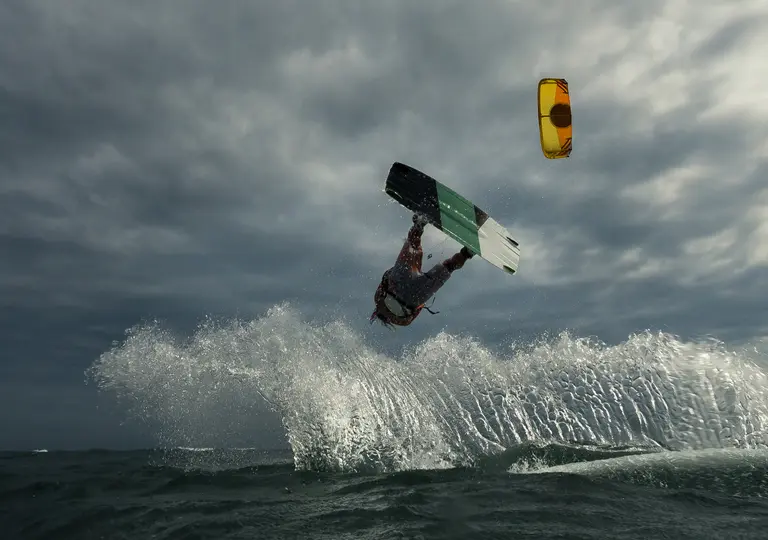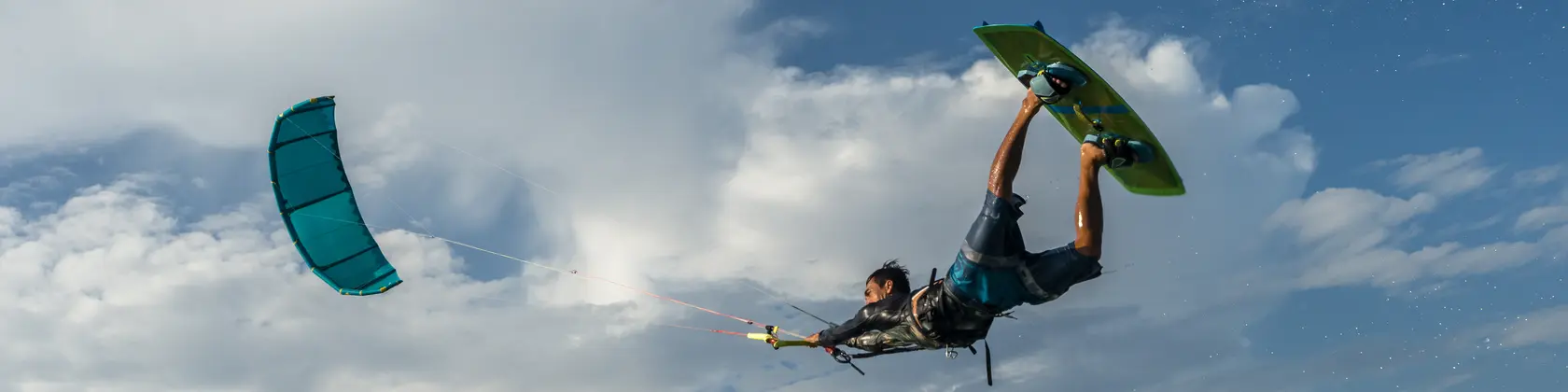

If you visit Mui Ne’s beachfront on a windy afternoon, you’ll soon see why this part of southern Vietnam is famous for kitesurfing. The sky is full of colorful kites, riders glide over the water, and the steady wind makes the sport seem easy.
Then you watch someone learning.
Their kite crashes. The board slips away. They get pulled through the water, stand up, try again, and slowly start to figure things out.
This is a much more accurate idea of what learning to kitesurf in Mui Ne is really like.
Mui Ne is one of Vietnam’s top spots for wind sports, with a long kitesurfing season, warm water, and many schools for beginners. But it’s not a calm lagoon where everyone learns in an hour. The sea can be rough, the wind strong, and learning takes time.
If you're thinking about trying kitesurfing in Mui Ne for the first time, here's what you should know before booking a lesson.
Is Mui Ne Good for Beginner Kitesurfers?
Yes, but with one important point to keep in mind.

Mui Ne has several things that make it attractive for beginners:
- a well-established kitesurfing scene
- numerous schools and instructors
- warm water
- a long windy season
- equipment rental readily available
- courses designed specifically for complete beginners
You don't need to arrive with your own kite, board or harness, and you don't need previous board-sport experience.
However, Mui Ne's main beaches aren't always the easiest places to learn to surf.
During the main wind season, the water can get choppy with waves and shorebreak. The wind often gets much stronger later in the day. Beginners can still learn here, but it’s especially important to pick a good instructor and the right time for your lesson.
Some schools use sections of beach with more beginner-friendly conditions rather than putting new students directly into the busiest part of the main kite zone.
So if your question is:
"Can I learn to kitesurf in Mui Ne?"
Definitely.
If your question is:
"Is Mui Ne the easiest place in Asia to learn?"
Probably not, and that’s an important difference to note.
When Is the Best Time to Learn Kitesurfing in Mui Ne?
The main Mui Ne kitesurfing season runs roughly from November to April, when the northeast monsoon brings the area's most reliable wind.
December through March generally offers the most consistent conditions, although exactly how strong the wind becomes varies from day to day.
For experienced riders, strong afternoon wind can be exactly what they came for.
If you’re starting, stronger wind isn’t always better.

November
November marks the beginning of the main season. Conditions are becoming more reliable, while the beaches can be less busy than during the peak winter months.
It can be a good compromise for beginners.
December to February
This is peak kitesurfing season.
The wind is generally most reliable, and these are also popular months to visit Mui Ne. On good days you'll see plenty of experienced riders on the water.
If you're visiting specifically to learn, reserving lessons in advance makes sense during this period.
March
March can still deliver very good wind, though it's toward the later part of the peak season.
For many travelers, it's another strong month to combine a normal Mui Ne trip with several days of lessons.
April
April is more transitional.
You can still get good kitesurfing days, but the weather becomes less predictable as the main northeast monsoon season ends.
May to October
Kitesurfing doesn't completely disappear.
Summer winds are usually lighter and less reliable, so schools might choose different spots depending on the day's weather.
If kitesurfing is the main reason you're traveling to Mui Ne, the winter season gives you much better odds.
If you want to try kitesurfing while you’re in Mui Ne, check with a local school for the wind forecast rather than assuming there will be enough wind.
What Happens During Your First Kitesurfing Lesson?
One of the biggest misconceptions about kitesurfing is that your first lesson consists of grabbing a board and immediately trying to ride.
It usually doesn't.
A responsible beginner course starts with the kite.
Before you can ride safely, you need to understand how the wind works, how to control the kite, and most importantly, what to do if something goes wrong.
Your first lessons will normally progress through several stages.
1. Wind and Safety Basics
You'll learn about the wind window, safe launching areas, equipment, and the kite's safety systems.
It isn't the most Instagram-friendly part of learning, but it's essential.
A full-size kite can be very powerful. Knowing how to reduce its power or let go is much more important than getting on the board right away.
2. Kite Control
Next comes learning how the kite reacts when you move the control bar.
At first, surprisingly small movements can send the kite somewhere you didn't intend.
The objective is to control it deliberately rather than react to it.
3. Body Dragging
Once you're comfortable enough with the kite, you'll usually enter the water without a board.
Using the kite's power, you'll learn to move through the water in different directions.
This is called body dragging.
It might seem like you’re putting off the “real” kitesurfing, but body dragging is a key skill. If you lose your board later, you’ll need to get back to it.
4. Water Relaunch and Self-Rescue
You'll also learn how to relaunch a kite after it falls into the water and what to do if you cannot continue riding.
Don't choose a school that treats safety as an optional extra.
5. The Board Finally Appears
Only after you can control the kite reasonably well does the board become the focus.
You'll practice positioning it, generating enough power with the kite, and attempting a water start.
This is usually the point where you really notice the learning curve.
Getting the kite, board, body position, and timing to cooperate simultaneously isn't easy.
But the first time you stand up and travel even a short distance across the water is also when the sport starts making sense.

How Long Does It Take to Learn?
Don’t believe anyone who says every beginner will be kitesurfing on their own after just a few hours.
People progress at very different speeds.
Some schools in Mui Ne offer short two- or three-hour introductory sessions, which are useful if you want to experience kite control and decide whether you enjoy the sport.
Beginner courses commonly run for around 5–12 hours, spread over several days.
A five-hour course may be enough to introduce you to kite control, body dragging, and your first attempts at a water-start. Becoming genuinely independent normally requires more practice.
For example, some established Mui Ne schools structure introductory training over roughly two hours, beginner courses over roughly five hours, and more intensive courses over roughly ten hours or more.
Your progress depends on:
- wind conditions
- water conditions
- physical fitness
- coordination
- previous board-sport experience
- lesson frequency
- quality of instruction
Most importantly, don’t plan your Mui Ne trip thinking that three hours of lessons will be enough to make you a kitesurfer.
If learning is one of the main reasons for your trip, allow at least 3 to 5 days in Mui Ne.
That provides room for multiple sessions, recovery, and the possibility of a poor-wind day.
How Much Do Kitesurfing Lessons Cost in Mui Ne?
Prices vary by school, instructor, and course length, but as of 2026, roughly US$45–55 per hour is a reasonable starting range for beginner instruction at established schools.
Longer courses may reduce the effective hourly cost.
For example, current advertised prices at Mui Ne schools include beginner/private lessons around $50–55 per hour, with multi-hour packages costing several hundred dollars.
Expect a complete beginner course to cost somewhere around:
| Lesson type | Approximate cost |
|---|---|
| One-hour beginner lesson | $45–55 |
| 3-hour introduction | $130–165 |
| 5-hour course | $225–275 |
| 10–12 hour course | $400–550+ |
These figures should be treated as planning estimates rather than fixed prices.
Before booking, check exactly what is included.
A proper lesson should normally provide the kite, board, harness, and necessary safety equipment. Established schools may also provide helmets, flotation vests, impact protection, and rash guards.
Private lessons cost more but can be worthwhile for beginners because the instructor isn't dividing attention between several students.
How to Choose a Kitesurfing School
Price shouldn’t be the first thing you look at.
Kitesurfing isn’t a sport where it’s smart to save a little money by picking the least professional instructor.
Look for a school that takes safety seriously and doesn't rush students onto the board.
Ask About Instructor Certification
Internationally recognized systems, such as IKO certification, are useful indicators that an instructor has received structured training.
Certification doesn’t mean someone is a great teacher, but it’s better than not knowing anything about their qualifications.
Ask About Student-to-Instructor Ratio
One-on-one instruction gives your instructor much more control over the lesson and usually means more actual practice time.
Small groups are fine for the early theory parts, but once you’re handling a powered kite in the water, having the instructor’s full attention is much more helpful.
Look at the Equipment
Beginner equipment should be modern, appropriately sized for the conditions, and equipped with functioning safety systems.
Helmets and flotation equipment should also be available.

Ask Where Beginners Actually Train
This question matters in Mui Ne.
Don't simply ask:
"Are you near the beach?"
Ask:
"Where will my beginner lesson take place today?"
The best spot can change depending on the wind, waves, and tides. A good school will pick the training area based on the day’s conditions, not just what’s easiest.
Don't Book Based Only on Google Photos
An amazing photo of an expert rider jumping off a wave doesn’t tell you much about how well they teach beginners.
Talk to the school.
Ask what you'll learn, how many hours they recommend, and what happens if the wind isn't suitable.
Their answers will tell you far more.
Do You Need to Be Fit?
You don't need to be an athlete.
Modern kitesurfing doesn’t require you to hold all the kite’s power with your arms. Most of the force goes through the harness.
Still, learning can be physically tiring.
You'll spend time walking through the sand, repeatedly getting into position, body-dragging, retrieving your board, and climbing back onto it after failed water starts.
A reasonable level of general fitness helps.
Swimming ability is much more important.
Established beginner courses generally require students to be comfortable swimmers because lessons eventually take place in open water.
If you aren't confident in the sea, tell your instructor before the lesson begins.
What Should You Bring?
You don't need to buy kitesurfing equipment for your first lesson.
The school should provide the specialist gear.
Bring:
- swimwear or board shorts
- high-SPF sunscreen
- water
- a towel
- sunglasses for before and after the session
- a change of dry clothes
A rash guard is useful for sun protection, although many schools provide one.
The water around Mui Ne is usually warm enough that you don’t need a thick wetsuit. On very windy days, though, staying in the water for a long time can feel cooler than you might expect.
Sun exposure is the bigger issue.
With the tropical sun, light reflecting off the water, and hours spent outside, it’s easy to underestimate how quickly you can get sunburned.
Is Kitesurfing Dangerous?
It can be.

A kite capable of pulling an adult rider across the water at speed deserves respect.
That doesn’t mean beginners should avoid kitesurfing. It just means you shouldn’t try to learn on your own.
Proper instruction covers:
- kite safety systems
- safe launching and landing
- reading wind conditions
- body dragging
- water relaunch
- self-rescue
- right-of-way rules
- maintaining distance from other riders and obstacles
Mui Ne's popularity also creates another consideration: traffic.
During the busy season, some parts of the main kite beach can get crowded. Beginners need space, and a good instructor will make sure you have it.
Never rent equipment and head onto the water alone simply because you've completed one introductory lesson.
Standing on the board for a moment isn’t the same as being able to kitesurf on your own.
Can You Try It Once?
Absolutely.
You don't have to turn your holiday into a week-long training camp.
Several schools offer introductory sessions specifically for travelers who aren't sure whether they want to commit to a full course.
This is the best approach if kitesurfing is just one part of your Mui Ne trip.
Take an introductory lesson.
Learn how the kite works.
Get into the water if conditions allow.
Then decide.
If you love it, extend your course.
If you find out that being pulled through the sea by a giant kite isn’t for you, you’ll still have tried one of Mui Ne’s main activities without giving up a big part of your trip.
Should You Plan Your Whole Mui Ne Trip Around Kitesurfing?
That depends on why you're coming.
If you're traveling specifically to learn to kitesurf in Vietnam, give yourself several days and visit during the main wind season.
Don’t book lessons right before you leave Mui Ne. Sports that depend on the wind don’t fit well with tight schedules.
If you're primarily visiting for the dunes, beaches and surrounding area, treat kitesurfing differently.
Reserve half a day for an introductory lesson and keep the rest of your itinerary flexible.
Mui Ne has plenty to do when you aren't on the water, from the White Sand Dunes and Red Sand Dunes to the fishing harbor, Fairy Stream and coastal cafés. My honest Mui Ne guide can help you decide how many days to stay.
If you are combining lessons with a longer visit, use the Mui Ne accommodation guide to choose a practical base along the coast.
Coming from the city? Compare bus and private car options in the Ho Chi Minh City to Mui Ne guide to plan your arrival around the wind season.