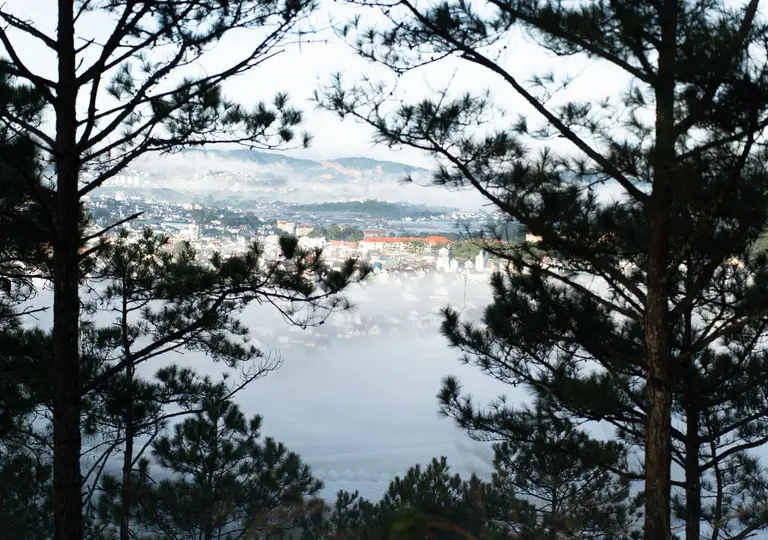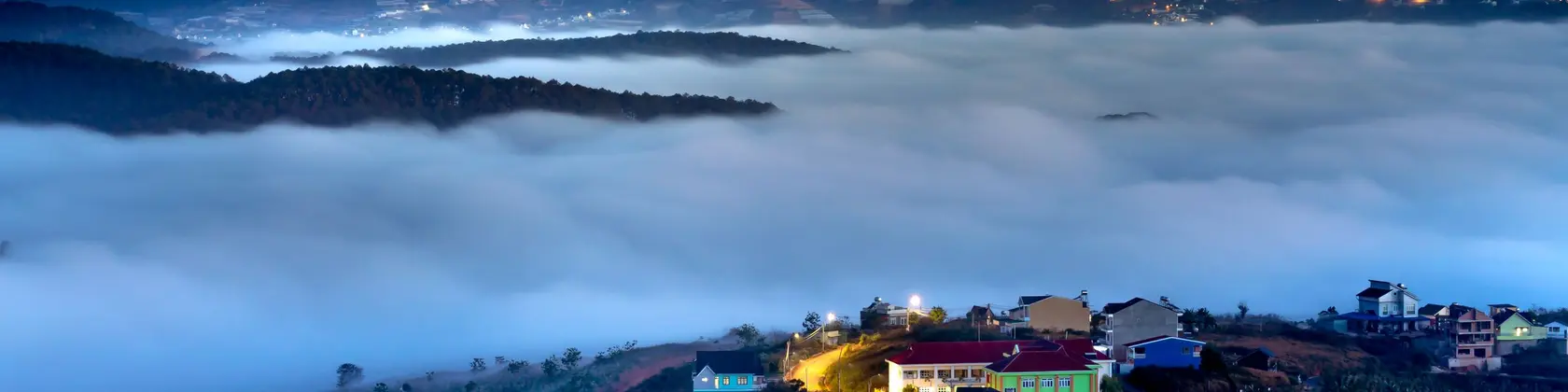

Da Lat stands out from the rest of Vietnam for a reason.
Ho Chi Minh City is often hot and humid, but in Da Lat, you might need a jacket after sunset. Mornings start misty, afternoons are bright and warm, and evenings cool off quickly, making a hot coffee feel just right.
That mountain climate is a big part of Da Lat's appeal.
This also means picking the best time to visit is not as simple as just skipping Vietnam's rainy season.
The best time to visit Da Lat is generally from December to March if your priorities are clear skies, comfortable daytime temperatures and the lowest chance of rain. February is particularly attractive for dry weather and spring flowers.
But the rest of the year can still be a great time to visit.
During the wetter months, the hills turn greener, waterfalls are fuller, and the atmosphere changes. Usually, rain comes later in the day instead of affecting your whole trip.
Here's what Da Lat's weather means for travelers, month by month.
Da Lat Weather at a Glance
Da Lat sits high in Vietnam's Central Highlands, roughly 1,500 meters above sea level.
That elevation keeps temperatures much cooler than in Vietnam's southern lowlands.
Rather than four typical seasons, it's easier to think of Da Lat as having two main weather periods:
Drier season: roughly November to March/April
Expect more sunshine, clearer skies, cooler evenings and considerably less rain.
Wetter season: roughly April/May to October
Rain becomes much more frequent, particularly from May onward, with September and October among the wettest parts of the year.
Temperatures themselves don't change dramatically.
Da Lat stays cool all year by Vietnamese standards. The main difference between months is how wet, cloudy, or clear it feels, not the temperature.
| Period | Typical conditions | Best for |
|---|---|---|
| December–February | Cool, dry, clearer skies | First visits, sightseeing, flowers, photography |
| March–April | Warmer, mostly pleasant, rain increasing | Outdoor activities, fewer peak-season crowds |
| May–August | Mild, greener, regular rain | Slow travel, cafes, waterfalls |
| September–October | Wettest period | Green landscapes, travelers comfortable with rain |
| November | Rain easing, cooler weather returning | Good shoulder-season compromise |

There are exceptions every year, of course.
Mountain weather changes fast, so a sunny morning doesn't always mean the afternoon will stay dry.
So, What Is the Best Month to Visit Da Lat?
For most first-time visitors, February is the strongest all-around choice.
Rainfall is typically very low, skies tend to be clearer, temperatures are comfortable, and spring flowers offer another reason to explore outside the city center.
One big thing to keep in mind is Tet.
Vietnamese Lunar New Year usually falls in late January or February, depending on the lunar calendar.
During Tet, many people travel within Vietnam. It can be much harder to find transport and accommodation, and prices and crowds often go up at popular spots. Buses on the Da Lat to Ho Chi Minh City route fill up especially fast around the holiday.
If your February trip is during Tet, be sure to book your accommodation and transport in Da Lat early.
If you want similar weather but want to avoid holiday crowds, December, January, or March are great options.
January: Cool, Dry and Excellent for Sightseeing
Weather: Cool and predominantly dry
Good for: First-time visitors, photography, walking, flowers
Watch for: Cold mornings and evenings, Tet timing in some years
January is one of Da Lat's most appealing months for weather.
The wetter part of the year has largely passed; humidity is lower and long stretches of dry weather make outdoor plans easier.
Days can feel beautifully mild in the sunshine.
Early mornings can feel very different.
Da Lat can get quite chilly for Vietnam, especially before sunrise and after dark. You won't need heavy winter clothes, but a light jacket or warm layer is a good idea.
January is a good month for wandering around Xuan Huong Lake, visiting gardens, exploring the countryside, or spending a full day at attractions without constantly checking the rain radar.
It can also overlap with Da Lat's spring blossom period.
Flowering dates change from year to year, so it's best not to plan your whole trip around seeing one specific tree in bloom.
February: One of the Best Months Overall
Weather: Dry, clear, and cool
Good for: Almost everything
Watch for: Tet crowds and higher demand
If good weather is your top priority, February is hard to beat.
Historical climate data makes it one of Da Lat's driest months, and Vietnam Tourism describes February skies here as among the clearest and bluest of the year.
That makes it particularly good for:
- countryside trips
- viewpoints
- hiking
- cycling
- photography
- outdoor cafes
- flower gardens
Spring is also an important time for flowers in Da Lat.
Pink mai anh dao blossoms are particularly associated with this time of year, although exact blooming dates depend on conditions. The official 2026 Mai Anh Dao Flower Festival, for example, ran from January 15 to February 15.

The downside is that February is also very popular.
Tet can transform travel conditions throughout Vietnam. Buses, flights and hotels experience heavy demand as people travel for the holiday, so February isn't automatically the quietest month just because the weather is good.
Verdict: Excellent. It could be the best month to visit, as long as your trip doesn't overlap with Tet.
March: Sunny, Warmer and Still Very Good
Weather: Mostly dry, becoming warmer
Good for: Outdoor activities and sightseeing
Watch for: Occasional rain becoming more likely later in the month
March is easy to overlook.
But it deserves more attention.
The very dry beginning of the year is gradually transitioning toward the wetter months, but March can still offer plenty of good weather.
Days become warmer without reaching the oppressive temperatures found in lower-altitude southern Vietnam.
This is a particularly good time if you plan to spend more time outside the city.
Waterfalls, coffee farms, countryside roads and hiking areas become much easier to enjoy when you aren't structuring the day around afternoon downpours.
So, March can be a smarter choice than trying to catch the “perfect” February window.
Verdict: One of the best months, especially for an active trip.
April: The Transition Begins
Weather: Warmer with increasing showers
Good for: Mixed sightseeing and outdoor activities
Watch for: Increasingly unpredictable afternoons
April sits between Da Lat's drier and wetter periods.
This makes April hard to describe with just one label.
You can still get excellent sunny days, especially earlier in the month, but showers become increasingly possible as the rainy season approaches.
On the plus side, it's warmer.
If the idea of Da Lat's chilly winter mornings doesn't appeal to you, April offers a softer version of the city's mountain climate.
This is a good time to stay flexible with your plans.
Do outdoor activities early, when possible, and save cafes, museums, or indoor attractions for later in the day if clouds begin to build.
Verdict: Still a good time to visit, but don't expect guaranteed dry weather.
May: Greener, Warmer and Noticeably Wetter
Weather: Mild to warm with regular showers
Good for: Green landscapes and relaxed trips
Watch for: Afternoon rain
By May, Da Lat feels different.
The wetter season is establishing itself; vegetation is becoming increasingly lush, and rain is no longer an occasional inconvenience you can largely ignore.
But it doesn't rain all day long.
A rainy-season day in Da Lat can still contain hours of usable weather.
You might wake to a bright morning, spend several hours exploring, then watch clouds build before an afternoon shower rolls across the hills.
The trick is to adjust your plans.
Try not to plan every day around having sunshine from morning to sunset.
Verdict: Good if you don't mind working around rain.
June: Rainy but Far From a Write-Off
Weather: Mild, cloudy and regularly wet
Good for: Cafes, slow travel and green scenery
Watch for: Outdoor plans being interrupted
June is firmly inside the wetter season.
If you want lots of blue-sky photos, June isn't the best month.
But for other travelers, June has its own appeal.
Da Lat's cafes become particularly appealing when rain moves through the city. Pine forests and surrounding farmland look intensely green, and the cooler climate means that even on humid days, it rarely feels like the tropical furnace you might encounter elsewhere in southern Vietnam.
The main challenge is the unpredictable weather.
A motorbike trip into the countryside becomes much less enjoyable when a heavy shower hits halfway through.
Build some flexibility into your schedule.
Verdict: Fine for a relaxed trip; weaker for a tightly planned outdoor itinerary.
July: Cool Escape, Frequent Showers
Weather: Mild with frequent rain
Good for: Escaping lowland heat, green landscapes
Watch for: Wet roads and reduced visibility
July is one of those months when Da Lat's climate itself can be the attraction.
Travelers coming from hotter parts of Vietnam may find the cooler air of the Central Highlands refreshing.
But this is still rainy season.
Roads outside the city can become wet, and visibility can deteriorate when clouds or mist move across higher ground.
That matters particularly if you're riding a motorbike.
Be extra careful on Da Lat's winding mountain roads in bad weather, as they are unlike regular city streets.
Start longer outdoor trips early and keep backup plans for the afternoon.
Verdict: Pleasant temperatures, unreliable weather.
August: Green, Cool and Unpredictable
Weather: Mild and wet
Good for: Slow travel and lush scenery
Watch for: Frequent rain
August continues the established rainy-season pattern.
If you picture Da Lat with endless blue skies over pine hills, August probably won't match that image.
Clouds, mist, and rain are all part of August's atmosphere.
But Da Lat has a different charm in this kind of weather.
Coffee shops overlooking misty valleys.
Warm food after an afternoon shower.
Clouds moving between pine-covered hills.
Waterfalls carrying considerably more water than during the dry months.

If you need perfect weather, August might be frustrating.
But if you enjoy a cozy, atmospheric vibe, you might feel differently.
Verdict: Not ideal for weather-dependent itineraries, but still enjoyable.
September: One of the Wettest Months
Weather: Wet and cloudy
Good for: Lush scenery and indoor/outdoor mixed trips
Watch for: Heavy rain
By September, rain is a major factor, not just a small chance.
Historical climate patterns show a substantial increase in rainfall and rainy days around this part of the year.
You can absolutely visit.
It's best not to plan your trip around activities that need perfect weather.
If you have only two days in Da Lat and both are packed with sunrise viewpoints, trekking, and countryside motorbike rides, then September poses unnecessary risk.
If you have four or five days and are happy to alternate among attractions, cafes, food, and whatever outdoor opportunities the weather offers, the calculation changes.
Verdict: Visit if your dates are fixed; otherwise, weather-focused travelers have better choices.
October: Rainy, Dramatic and Very Green
Weather: Among the wettest conditions of the year
Good for: Green scenery, waterfalls, fewer weather expectations
Watch for: Heavy rainfall and disrupted outdoor plans
October is typically one of Da Lat's rainiest months.
Climate data indicates that it receives some of the highest average rainfall of the year.
If you want a classic sightseeing holiday, that can be a drawback.
For the landscape, not necessarily.
The countryside is intensely green, and waterfalls can be far more impressive than during the dry season.
Late October also brings another seasonal feature: persimmons.
Vietnam Tourism notes that Da Lat's persimmon harvest generally occurs in late October and November, coinciding with the appearance of wild sunflowers at the beginning of the Central Highlands winter.
So, October isn't a bad time to visit.
It's just a more specialized experience.
Verdict: One of the weakest choices for guaranteed weather, but potentially rewarding for seasonal scenery.
November: The Weather Starts Turning
Weather: Rain decreasing, cooler conditions returning
Good for: Shoulder-season travel, countryside scenery
Watch for: Lingering rain
November is a transition month worth considering.
Rain hasn't necessarily disappeared, particularly early in the month, but conditions begin shifting toward Da Lat's drier period.
The landscape is still green from months of rainfall.
Persimmon season can continue into November, while wild sunflowers add color around the surrounding countryside.
Temperatures also begin feeling cooler.
Vietnam Tourism recommends bringing a jumper between November and January. This is good advice if you plan to be outside in the early mornings or evenings.
So, in November, you get a bit of both sides of Da Lat:
the lushness of rainy season and the beginning of the clearer, cooler months.
Verdict: A good shoulder-season choice, particularly later in the month.
December: Cool, Drier and Atmospheric
Weather: Cool with increasingly dry conditions
Good for: First visits, couples, sightseeing, outdoor activities
Watch for: Chilly evenings and holiday demand
December is when Da Lat really leans into its mountain-city personality.
The rain has generally eased substantially compared with September and October; skies have become clearer, and evenings can feel surprisingly cold after arriving from southern Vietnam.
This is excellent walking weather.
It's also good for exploring outside the center without constantly worrying about afternoon storms.
December is popular for another reason: the cool air fits Da Lat's romantic image perfectly.
Coffee shops, pine forests, flower gardens and misty mornings all feel particularly appropriate.
Pack a warm layer for the evenings, since Vietnam isn't always hot enough for shorts and a T-shirt all day.
Verdict: One of the best months to visit.
Best Time to Visit Da Lat for Flowers
There isn't one single Da Lat flower season.
Different plants bloom at different times of the year, and weather can shift their flowering dates.
For the famous pink mai anh dao blossoms, January and February are the best times to see them.
Vietnam Tourism specifically associates February with spring blossoms in Da Lat, while the official 2026 Mai Anh Dao festival ran from mid-January to mid-February.
Late October and November bring a different landscape, with wild sunflowers appearing around the hills.
Try not to plan a non-refundable trip based on a specific predicted bloom date months ahead.
Nature doesn't always follow the tourism calendar.
Best Time for Hiking and Outdoor Activities
Choose December through March if hiking, cycling, canyoning, or countryside exploration is a major reason for visiting.
You can still do these activities outside the dry season, but weather becomes a bigger variable.
For trekking in particular, rain affects more than comfort.
Trails become slippery, cloud can reduce views, and mountain weather can change rapidly.
February and March provide the best balance between dry conditions and comfortable daytime temperatures.
Best Time for Waterfalls
This is where the idea of “best weather” doesn't always apply.
If waterfalls are your priority, the driest months aren't necessarily the most impressive.

Months of rain increase water flow, meaning waterfalls around Da Lat can look much more powerful during and toward the end of the wet season.
The downside is clear: the rain that makes the waterfalls impressive can also make them harder to visit.
For a compromise, consider November, when the landscape still benefits from the rainy season, but conditions are beginning to improve.
Best Time to Avoid Crowds
Weather isn't the only factor.
Da Lat is a major domestic tourism destination, so weekends and Vietnamese public holidays can matter almost as much as the season.
The biggest date to watch is Tet, which falls in late January or February.
Travel demand across Vietnam surges around the Lunar New Year, and Vietnam Tourism advises booking accommodation and transport well in advance.
For a quieter experience, consider:
- weekdays instead of weekends
- March or April outside major holidays
- November before the peak dry-season period
A rainy Tuesday can often feel much quieter than a sunny weekend during a holiday.
What to Pack for Da Lat
Even in the warmer months, don't pack for Da Lat like you would for a beach trip.
At minimum, bring:
- a light jacket or sweater
- comfortable walking shoes
- light clothing for daytime
- rain protection during the wetter months
- sunscreen
- something warmer if you plan sunrise trips or late evenings outdoors
From roughly November through January, an extra warm layer is particularly useful. Vietnam Tourism specifically advises visitors to bring a jumper during this period.
In the rainy season, a lightweight waterproof jacket is more practical than carrying a big umbrella everywhere, especially if you're riding a motorbike.
When Should You Actually Go?
If this is your first trip to Da Lat, aim for:
December to March.
You'll have the best chance of enjoying the cool, bright mountain weather that most people picture when they think of Da Lat.
If we had to narrow that further:
February: best overall weather and spring atmosphere
March: excellent for outdoor activities
December: cool, dry and atmospheric
January: very good weather, but check Tet dates
For fewer crowds while keeping reasonably good conditions:
March, April or November are worth considering.
And if you're already traveling through Vietnam during June, July or August, perhaps coming up from Mui Ne into the highlands?
Don't skip Da Lat just because it's rainy season.
Stay an extra day if possible, keep your schedule flexible, and expect some rain.
Da Lat isn't a destination that only works under blue skies.
Part of Da Lat's charm is watching clouds move through the hills, relaxing in a cafe while it rains, and then stepping outside later to find the city cool, green, and transformed.
That's why the best time to visit Da Lat depends less on finding the perfect month and more on choosing which side of the city you want to experience.